Influencer Marketing for Brands: A Complete Guide to Growing Your Business
Focus Keyword: Influencer Marketing for Brands
SEO Title: Influencer Marketing for Brands: A Complete Guide to Growing Your Business
Meta Description: Discover how influencer marketing for brands works, its benefits, strategies, and best practices to build trust, reach new audiences, and grow your business.
Introduction
In today’s digital world, consumers are constantly exposed to advertisements on social media, search engines, websites, and other online platforms. Because of this, traditional advertising alone may not always be enough to capture attention or build trust. This is where influencer marketing for brands can make a significant difference.
Influencers have built loyal communities around specific interests, industries, lifestyles, and topics. Their recommendations can influence what their followers discover, consider, and purchase. For brands, working with the right influencer can be an effective way to reach a targeted audience while creating authentic and engaging content.
Whether you are a small business, startup, or established company, influencer marketing can help increase brand awareness, strengthen credibility, generate engagement, and support sales.
What Is Influencer Marketing for Brands?
Influencer marketing is a digital marketing strategy where a brand collaborates with an individual who has an established audience and influence on social media or other online platforms.
Instead of communicating directly with potential customers through traditional advertisements, brands work with influencers to introduce their products or services to an audience that already trusts them.
For example, a fitness brand might collaborate with a fitness creator to demonstrate its products through Instagram Reels, YouTube videos, or TikTok content.
The key to successful influencer marketing for brands is choosing an influencer whose audience, content, values, and communication style match the brand.
Why Is Influencer Marketing Important for Brands?
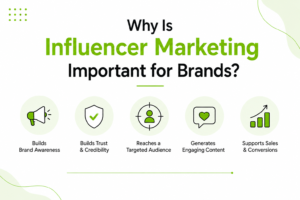
Influencer marketing has become an important part of modern digital marketing because people often trust recommendations from creators they follow.
Here are some major reasons brands use influencer marketing:
1. Builds Brand Awareness
Influencers can introduce your brand to thousands or even millions of potential customers. A well-planned collaboration can help people discover your business for the first time.
This is especially useful for new brands trying to establish an online presence.
2. Builds Trust and Credibility
Consumers may be more receptive to a product recommendation from a creator they already follow and trust.
When an influencer genuinely uses and recommends a product, the promotion can feel more natural than a traditional advertisement.
3. Reaches a Targeted Audience
One of the biggest advantages of influencer marketing is audience targeting.
Instead of promoting your product to a broad audience, you can work with influencers who specialize in your industry or niche.
For example:
Beauty brands can work with beauty creators.
Fitness brands can collaborate with fitness influencers.
Technology companies can partner with tech reviewers.
Food brands can work with food creators.
Fashion businesses can collaborate with fashion influencers.
4. Generates Engaging Content
Influencers are experienced at creating content that their audiences enjoy.
A collaboration can produce:
Short-form videos
Product reviews
Tutorials
Unboxing videos
Product demonstrations
Stories
Testimonials
Educational content
Brands can also repurpose high-quality influencer content across their own marketing channels, with appropriate permission.
5. Supports Sales and Conversions
Influencer marketing can do more than create awareness. A strong campaign can encourage people to visit your website, explore your products, and make purchases.
Brands can use discount codes, affiliate links, promotional offers, and trackable URLs to measure conversions.
Types of Influencers for Brands
Not every influencer has the same audience size or marketing value. Brands should select influencers based on their campaign objectives rather than simply choosing someone with the largest follower count.
Nano Influencers
Nano influencers generally have smaller but highly engaged communities.
They can be useful for local businesses and niche campaigns because their relationships with followers may feel more personal.
Micro Influencers
Micro influencers typically have a focused audience within a specific niche.
They can be a strong option for brands looking for engagement, authenticity, and targeted reach.
Macro Influencers
Macro influencers have larger audiences and can provide significant exposure.
They are often suitable for campaigns focused on increasing brand awareness on a larger scale.
Mega Influencers and Celebrities
These influencers have extremely large audiences and can provide massive visibility.
However, collaborations can be more expensive, and large follower counts do not automatically guarantee strong engagement or conversions.
How to Choose the Right Influencer for Your Brand
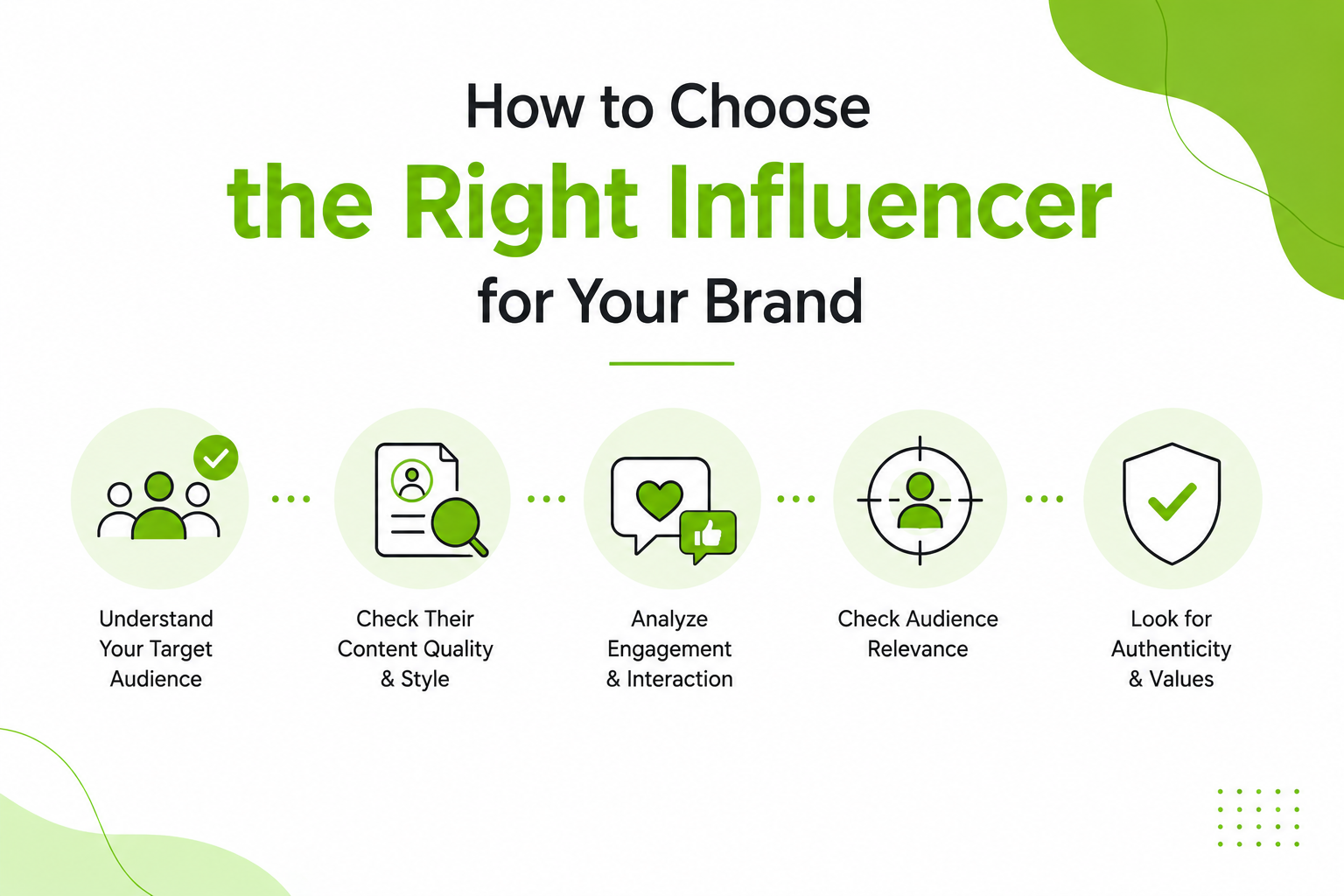
Choosing the right influencer is one of the most important steps in influencer marketing.
1. Understand Your Target Audience
Before searching for influencers, clearly define who you want to reach.
Consider factors such as:
Age
Location
Interests
Buying behavior
Industry
Lifestyle
Social media platforms
2. Check Their Content Quality
Look at the influencer’s previous content.
Ask yourself:
Is the content professional?
Does it match your brand image?
Is the creator consistent?
Do they communicate clearly?
Would their content appeal to your target customers?
3. Analyze Engagement
Follower count is not the only important metric.
Look at likes, comments, shares, saves, views, and overall audience interaction.
An influencer with a smaller but highly engaged audience may deliver better results than an influencer with a large but inactive following.
4. Check Audience Relevance
The influencer’s audience should match your target customers.
A creator can have a large following, but if those followers are not interested in your product category, the campaign may produce limited results.
5. Look for Authenticity
Authenticity is extremely important in influencer marketing.
Avoid influencers who promote too many unrelated products or whose sponsored content feels forced.
Choose creators who can naturally integrate your product into their content.
How to Create an Influencer Marketing Strategy
A successful campaign needs more than simply sending a product to an influencer. You need a clear strategy.
Step 1: Set Your Campaign Goal
Start by deciding what you want to achieve.
Your goal could be:
Increase brand awareness
Generate website traffic
Increase product sales
Launch a new product
Grow social media followers
Generate leads
Create user-generated content
Having a clear objective makes it easier to measure campaign performance.
Step 2: Choose the Right Platform
Different platforms attract different audiences.
For visual products, Instagram and TikTok can be useful. For detailed product education and reviews, YouTube can be highly effective.
Choose the platform based on where your target audience spends time.
Step 3: Find Relevant Influencers
Research creators within your industry.
Check their audience, engagement, content style, previous collaborations, and reputation before contacting them.
Step 4: Create a Clear Campaign Brief
Give influencers enough information to understand your campaign.
A brief can include:
Campaign objective
Product information
Key messages
Content requirements
Publishing schedule
Brand guidelines
Disclosure requirements
Tracking method
At the same time, allow influencers some creative freedom. Their followers respond to their natural communication style.
Step 5: Track Performance
Measure campaign results using relevant metrics.
Important metrics include:
Reach
Impressions
Engagement rate
Video views
Website traffic
Click-through rate
Leads
Sales
Conversion rate
Return on investment
These insights can help you understand what worked and improve future campaigns.
Influencer Marketing Best Practices
To get better results from influencer marketing for brands, consider the following best practices.
Focus on Authentic Partnerships
Build long-term relationships with influencers instead of treating every collaboration as a one-time advertisement.
Long-term partnerships can make recommendations feel more genuine.
Prioritize Engagement Over Followers
A large follower count does not guarantee campaign success.
Always evaluate engagement quality and audience relevance.
Give Influencers Creative Freedom
Provide clear guidelines but avoid controlling every word or action.
Influencers understand how their audience responds to content. Giving them creative flexibility can make sponsored content more natural.
Use Trackable Campaigns
Use unique discount codes, affiliate links, landing pages, or campaign URLs to understand where traffic and sales are coming from.
Follow Advertising Disclosure Rules
Sponsored collaborations should be clearly disclosed according to the rules applicable to your market and platform.
Transparency helps protect both the brand and the influencer while maintaining audience trust.
Common Influencer Marketing Mistakes
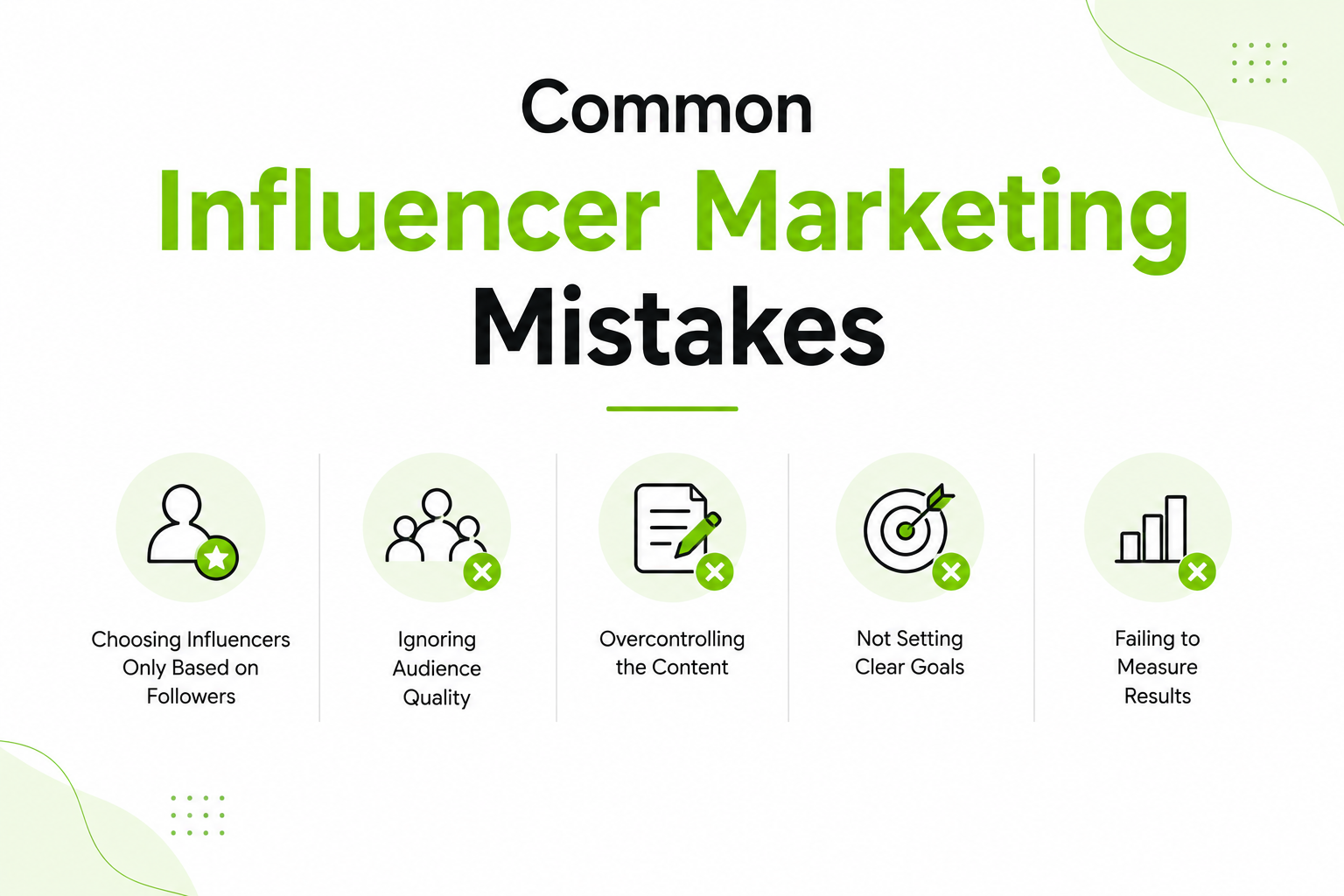
Some brands make mistakes that can reduce campaign performance.
Choosing Influencers Only Based on Followers
Follower count should not be the only selection criteria.
Ignoring Audience Quality
Fake followers, bots, or irrelevant audiences can negatively affect campaign results.
Overcontrolling the Content
If brands make influencer content sound like a traditional advertisement, it may lose its authenticity.
Not Setting Clear Goals
Without measurable objectives, it becomes difficult to determine whether a campaign was successful.
Failing to Measure Results
Always analyze campaign performance and use the data to improve future campaigns.
How Brands Can Measure Influencer Marketing ROI
Return on investment is an important part of any marketing campaign.
For example, if a brand spends money on influencer collaborations and generates measurable sales through unique discount codes or affiliate links, the brand can compare revenue against campaign costs.
However, not every influencer campaign is designed to generate immediate sales. Some campaigns focus on awareness, reach, engagement, or content creation.
Therefore, the metrics should match the original campaign objective.
The Future of Influencer Marketing for Brands
Influencer marketing continues to evolve as social media platforms and consumer behavior change.
Short-form video, creator-led storytelling, live content, and authentic product demonstrations are likely to remain important parts of influencer campaigns.
Brands are also increasingly looking beyond follower counts and focusing on community quality, engagement, relevance, and measurable business results.
The future of influencer marketing will likely be less about simply paying popular personalities to promote products and more about building meaningful partnerships with creators who genuinely connect with a brand’s target audience.
Conclusion
Influencer marketing for brands can be a powerful strategy for increasing awareness, building trust, reaching targeted audiences, creating engaging content, and supporting business growth.
The key to success is not simply finding the most popular influencer. Instead, brands should identify creators who have the right audience, strong engagement, authentic content, and a natural connection to the product or service.
By setting clear goals, choosing relevant influencers, creating authentic campaigns, tracking performance, and building long-term creator relationships, businesses can make influencer marketing an effective part of their overall digital marketing strategy.
Ready to grow your brand with influencer marketing? Start by identifying your target audience, finding the right creators, and building authentic partnerships that turn attention into meaningful results.
Influencer Marketing for Brands: A Complete Guide to Growing Your Business
Focus Keyword: Influencer Marketing for Brands
SEO Title: Influencer Marketing for Brands: A Complete Guide to Growing Your Business
Meta Description: Discover how influencer marketing for brands works, its benefits, strategies, and best practices to build trust, reach new audiences, and grow your business.
Introduction
In today’s digital world, consumers are constantly exposed to advertisements on social media, search engines, websites, and other online platforms. Because of this, traditional advertising alone may not always be enough to capture attention or build trust. This is where influencer marketing for brands can make a significant difference.
Influencers have built loyal communities around specific interests, industries, lifestyles, and topics. Their recommendations can influence what their followers discover, consider, and purchase. For brands, working with the right influencer can be an effective way to reach a targeted audience while creating authentic and engaging content.
Whether you are a small business, startup, or established company, influencer marketing can help increase brand awareness, strengthen credibility, generate engagement, and support sales.
What Is Influencer Marketing for Brands?
Influencer marketing is a digital marketing strategy where a brand collaborates with an individual who has an established audience and influence on social media or other online platforms.
Instead of communicating directly with potential customers through traditional advertisements, brands work with influencers to introduce their products or services to an audience that already trusts them.
For example, a fitness brand might collaborate with a fitness creator to demonstrate its products through Instagram Reels, YouTube videos, or TikTok content.
The key to successful influencer marketing for brands is choosing an influencer whose audience, content, values, and communication style match the brand.
Why Is Influencer Marketing Important for Brands?
Influencer marketing has become an important part of modern digital marketing because people often trust recommendations from creators they follow.
Here are some major reasons brands use influencer marketing:
1. Builds Brand Awareness
Influencers can introduce your brand to thousands or even millions of potential customers. A well-planned collaboration can help people discover your business for the first time.
This is especially useful for new brands trying to establish an online presence.
2. Builds Trust and Credibility
Consumers may be more receptive to a product recommendation from a creator they already follow and trust.
When an influencer genuinely uses and recommends a product, the promotion can feel more natural than a traditional advertisement.
3. Reaches a Targeted Audience
One of the biggest advantages of influencer marketing is audience targeting.
Instead of promoting your product to a broad audience, you can work with influencers who specialize in your industry or niche.
For example:
Beauty brands can work with beauty creators.
Fitness brands can collaborate with fitness influencers.
Technology companies can partner with tech reviewers.
Food brands can work with food creators.
Fashion businesses can collaborate with fashion influencers.
4. Generates Engaging Content
Influencers are experienced at creating content that their audiences enjoy.
A collaboration can produce:
Short-form videos
Product reviews
Tutorials
Unboxing videos
Product demonstrations
Stories
Testimonials
Educational content
Brands can also repurpose high-quality influencer content across their own marketing channels, with appropriate permission.
5. Supports Sales and Conversions
Influencer marketing can do more than create awareness. A strong campaign can encourage people to visit your website, explore your products, and make purchases.
Brands can use discount codes, affiliate links, promotional offers, and trackable URLs to measure conversions.
Types of Influencers for Brands
Not every influencer has the same audience size or marketing value. Brands should select influencers based on their campaign objectives rather than simply choosing someone with the largest follower count.
Nano Influencers
Nano influencers generally have smaller but highly engaged communities.
They can be useful for local businesses and niche campaigns because their relationships with followers may feel more personal.
Micro Influencers
Micro influencers typically have a focused audience within a specific niche.
They can be a strong option for brands looking for engagement, authenticity, and targeted reach.
Macro Influencers
Macro influencers have larger audiences and can provide significant exposure.
They are often suitable for campaigns focused on increasing brand awareness on a larger scale.
Mega Influencers and Celebrities
These influencers have extremely large audiences and can provide massive visibility.
However, collaborations can be more expensive, and large follower counts do not automatically guarantee strong engagement or conversions.
How to Choose the Right Influencer for Your Brand
Choosing the right influencer is one of the most important steps in influencer marketing.
1. Understand Your Target Audience
Before searching for influencers, clearly define who you want to reach.
Consider factors such as:
Age
Location
Interests
Buying behavior
Industry
Lifestyle
Social media platforms
2. Check Their Content Quality
Look at the influencer’s previous content.
Ask yourself:
Is the content professional?
Does it match your brand image?
Is the creator consistent?
Do they communicate clearly?
Would their content appeal to your target customers?
3. Analyze Engagement
Follower count is not the only important metric.
Look at likes, comments, shares, saves, views, and overall audience interaction.
An influencer with a smaller but highly engaged audience may deliver better results than an influencer with a large but inactive following.
4. Check Audience Relevance
The influencer’s audience should match your target customers.
A creator can have a large following, but if those followers are not interested in your product category, the campaign may produce limited results.
5. Look for Authenticity
Authenticity is extremely important in influencer marketing.
Avoid influencers who promote too many unrelated products or whose sponsored content feels forced.
Choose creators who can naturally integrate your product into their content.
How to Create an Influencer Marketing Strategy
A successful campaign needs more than simply sending a product to an influencer. You need a clear strategy.
Step 1: Set Your Campaign Goal
Start by deciding what you want to achieve.
Your goal could be:
Increase brand awareness
Generate website traffic
Increase product sales
Launch a new product
Grow social media followers
Generate leads
Create user-generated content
Having a clear objective makes it easier to measure campaign performance.
Step 2: Choose the Right Platform
Different platforms attract different audiences.
For visual products, Instagram and TikTok can be useful. For detailed product education and reviews, YouTube can be highly effective.
Choose the platform based on where your target audience spends time.
Step 3: Find Relevant Influencers
Research creators within your industry.
Check their audience, engagement, content style, previous collaborations, and reputation before contacting them.
Step 4: Create a Clear Campaign Brief
Give influencers enough information to understand your campaign.
A brief can include:
Campaign objective
Product information
Key messages
Content requirements
Publishing schedule
Brand guidelines
Disclosure requirements
Tracking method
At the same time, allow influencers some creative freedom. Their followers respond to their natural communication style.
Step 5: Track Performance
Measure campaign results using relevant metrics.
Important metrics include:
Reach
Impressions
Engagement rate
Video views
Website traffic
Click-through rate
Leads
Sales
Conversion rate
Return on investment
These insights can help you understand what worked and improve future campaigns.
Influencer Marketing Best Practices
To get better results from influencer marketing for brands, consider the following best practices.
Focus on Authentic Partnerships
Build long-term relationships with influencers instead of treating every collaboration as a one-time advertisement.
Long-term partnerships can make recommendations feel more genuine.
Prioritize Engagement Over Followers
A large follower count does not guarantee campaign success.
Always evaluate engagement quality and audience relevance.
Give Influencers Creative Freedom
Provide clear guidelines but avoid controlling every word or action.
Influencers understand how their audience responds to content. Giving them creative flexibility can make sponsored content more natural.
Use Trackable Campaigns
Use unique discount codes, affiliate links, landing pages, or campaign URLs to understand where traffic and sales are coming from.
Follow Advertising Disclosure Rules
Sponsored collaborations should be clearly disclosed according to the rules applicable to your market and platform.
Transparency helps protect both the brand and the influencer while maintaining audience trust.
Common Influencer Marketing Mistakes
Some brands make mistakes that can reduce campaign performance.
Choosing Influencers Only Based on Followers
Follower count should not be the only selection criteria.
Ignoring Audience Quality
Fake followers, bots, or irrelevant audiences can negatively affect campaign results.
Overcontrolling the Content
If brands make influencer content sound like a traditional advertisement, it may lose its authenticity.
Not Setting Clear Goals
Without measurable objectives, it becomes difficult to determine whether a campaign was successful.
Failing to Measure Results
Always analyze campaign performance and use the data to improve future campaigns.
How Brands Can Measure Influencer Marketing ROI
Return on investment is an important part of any marketing campaign.
For example, if a brand spends money on influencer collaborations and generates measurable sales through unique discount codes or affiliate links, the brand can compare revenue against campaign costs.
However, not every influencer campaign is designed to generate immediate sales. Some campaigns focus on awareness, reach, engagement, or content creation.
Therefore, the metrics should match the original campaign objective.
The Future of Influencer Marketing for Brands
Influencer marketing continues to evolve as social media platforms and consumer behavior change.
Short-form video, creator-led storytelling, live content, and authentic product demonstrations are likely to remain important parts of influencer campaigns.
Brands are also increasingly looking beyond follower counts and focusing on community quality, engagement, relevance, and measurable business results.
The future of influencer marketing will likely be less about simply paying popular personalities to promote products and more about building meaningful partnerships with creators who genuinely connect with a brand’s target audience.
Conclusion
Influencer marketing for brands can be a powerful strategy for increasing awareness, building trust, reaching targeted audiences, creating engaging content, and supporting business growth.
The key to success is not simply finding the most popular influencer. Instead, brands should identify creators who have the right audience, strong engagement, authentic content, and a natural connection to the product or service.
By setting clear goals, choosing relevant influencers, creating authentic campaigns, tracking performance, and building long-term creator relationships, businesses can make influencer marketing an effective part of their overall digital marketing strategy.
Ready to grow your brand with influencer marketing? Start by identifying your target audience, finding the right creators, and building authentic partnerships that turn attention into meaningful results.