https://www.orangevideos.in/blog/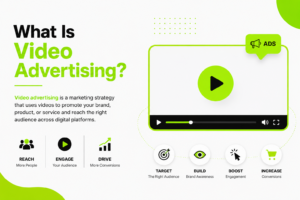 Video Advertising
SEO Title: Video Advertising: A Complete Guide for Businesses
Meta Description: Learn how video advertising works, its benefits, types, best practices, and how businesses can use video ads to attract customers and increase conversions.
What Is Video Advertising?
Video advertising is a form of digital marketing where businesses use video content to promote their products, services, brands, or ideas to a specific audience. Instead of relying only on text, images, or banners, video ads combine visuals, sound, motion, storytelling, and messaging to communicate with potential customers.
Video advertisements can appear across many digital platforms, including YouTube, Instagram, Facebook, TikTok, websites, mobile apps, streaming platforms, and search engines. Depending on the campaign objective, a video ad may be designed to increase brand awareness, generate leads, promote a product, drive website traffic, or encourage customers to make a purchase.
One of the biggest advantages of video advertising is its ability to explain an idea quickly. For example, a company selling software can use a short video to demonstrate how its product works. An ecommerce brand can show its product in use, while a service-based business can use video to explain how its service solves a customer’s problem.
How Does Video Advertising Work?
A typical video advertising campaign involves several important steps:
- Define the marketing goal
Businesses first decide what they want to achieve. The goal might be increasing awareness, generating leads, getting more website visitors, or increasing sales. - Identify the target audience
Advertisers determine who should see the video based on factors such as interests, demographics, location, online behavior, or previous interactions with the business. - Create the video ad
The video is created around a specific message. A successful video usually includes a strong opening, an understandable message, the main benefit, and a clear call to action. - Choose the advertising platform
The advertiser selects platforms where the target audience is most active. For example, YouTube may be useful for longer demonstrations, while Instagram or TikTok can be effective for short-form video content. - Launch and optimize the campaign
After the advertisement is published, marketers monitor performance and make changes to improve results. They may test different videos, audiences, messages, or calls to action.
Why Is Video Advertising Effective?
Video can communicate information faster than many traditional advertising formats. A well-produced video can show a product, demonstrate its benefits, create an emotional connection, and guide the viewer toward taking action.
For example, instead of writing several paragraphs explaining how a fitness product works, a brand can demonstrate the product in a 30-second video. This makes the information easier for viewers to understand and remember.
Video advertising can also support different stages of the customer journey:
- Awareness: Introduce your brand to new audiences.
- Consideration: Explain your product or service.
- Conversion: Encourage viewers to purchase or sign up.
- Retention: Keep existing customers engaged.
Example of Video Advertising
Imagine a digital marketing agency wants to attract small-business owners.
Instead of creating a simple banner saying “Grow Your Business Online,” the agency could create a 30-second video showing:
Problem: “Not getting enough customers from your website?”
Solution: Show how the agency uses SEO, Google Ads, and social media marketing.
Benefit: Demonstrate improved traffic and leads.
Call to Action: “Book your free consultation today.”
This type of video advertising combines a customer’s problem, the company’s solution, and a clear next step in a short and engaging format.
Video Advertising vs. Video Marketing
Although these terms are closely related, they are not exactly the same.
Video marketing is the broader strategy of using videos to promote a brand or communicate with an audience. This can include organic YouTube videos, tutorials, educational content, social media videos, and product videos.
Video advertising specifically refers to paid video promotions where a business pays a platform or publisher to show its video to a targeted audience.
In simple terms:
Video Marketing = Organic + Paid Video Content
Video Advertising = Paid Video Promotion
This distinction is useful when creating a digital marketing strategy because businesses can combine organic video content with paid video advertising to reach both existing followers and new audiences.
Why Is Video Advertising Important?

People consume a huge amount of video content every day. This creates an opportunity for businesses to reach potential customers where they already spend their time.
Some major benefits of video advertising include:
- Higher engagement: Video can capture attention more effectively than static content.
- Better storytelling: Brands can demonstrate products and communicate ideas visually.
- Brand awareness: Consistent video content can help people recognize and remember a brand.
- Product demonstrations: Businesses can show how their products or services work.
- Increased conversions: Well-designed video ads can encourage viewers to take action.
- Mobile-friendly marketing: Short-form videos work particularly well on mobile devices.
Types of Video Advertising
There are several types of video advertising that businesses can use depending on their goals.
1. YouTube Video Advertising
YouTube is one of the most popular platforms for video advertising. Businesses can create video campaigns designed to reach users based on interests, searches, demographics, and online behavior.
YouTube ads can be useful for:
- Brand awareness
- Product promotion
- Lead generation
- Retargeting
- Product demonstrations
2. Social Media Video Advertising
Platforms such as Instagram, Facebook, TikTok, and LinkedIn provide opportunities for businesses to promote video content.
Short-form videos can be particularly effective because they are designed for quick consumption and mobile users.
3. In-Stream Video Ads
In-stream ads appear before, during, or after video content. These advertisements allow brands to reach audiences while they are already watching videos.
4. Social Media Short-Form Ads
Short videos are increasingly important for digital marketing. Businesses can use short-form video ads to introduce products, highlight benefits, answer customer questions, or promote special offers.
5. Product Video Advertising
Product-focused video ads demonstrate how a product works and explain its benefits.
For example, an ecommerce business could create a short video showing a product from different angles and demonstrating how customers can use it.
How to Create an Effective Video Advertising Campaign

Creating a successful video advertising campaign requires more than simply producing a video.
Step 1: Define Your Goal
Start by deciding what you want your video advertisement to achieve.
Your goal could be:
- Increasing brand awareness
- Generating leads
- Driving website traffic
- Increasing sales
- Promoting a new product
- Retargeting existing visitors
A clear goal will help you choose the right platform, audience, message, and call to action.
Step 2: Understand Your Target Audience
Before creating your video, understand who you are trying to reach.
Consider their:
- Age
- Location
- Interests
- Problems
- Buying behavior
- Online habits
Understanding your audience helps you create a message that feels relevant rather than generic.
Step 3: Create a Strong Hook
The first few seconds of a video advertisement are extremely important.
Start with something that immediately gets the viewer’s attention.
For example:
“Still struggling to generate leads online?”
A strong hook creates curiosity and encourages viewers to continue watching.
Step 4: Keep Your Message Simple
Avoid putting too much information into one advertisement.
Focus on one main problem, one solution, and one action you want the viewer to take.
A simple structure is:
Problem → Solution → Benefit → Call to Action
Step 5: Add a Clear Call to Action
Tell viewers what they should do next.
Examples include:
- Shop Now
- Learn More
- Get Started
- Book a Free Consultation
- Visit Our Website
- Sign Up Today
A clear call to action makes your video advertising campaign more focused.
Best Practices for Video Advertising
To improve the performance of your video ads, follow these best practices:
Make the First Few Seconds Count
Don’t take too long to introduce your message. Capture attention immediately.
Design for Mobile
Many people watch videos on smartphones, so make sure your videos are easy to view on smaller screens.
Use Captions
Some users watch videos without sound. Captions help them understand your message even when audio is turned off.
Show Your Product
Whenever possible, demonstrate your product or service instead of only talking about it.
Test Different Versions
Create multiple versions of your video and compare their performance. You can test different hooks, visuals, headlines, lengths, and calls to action.
Track Your Results
Monitor important metrics such as:
- Views
- View-through rate
- Click-through rate
- Engagement
- Conversions
- Cost per conversion
- Return on ad spend
These metrics can help you understand what is working and where your campaign needs improvement.
Video Advertising vs Traditional Advertising
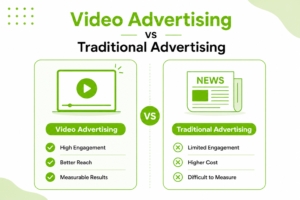
Traditional advertising often relies on formats such as television, radio, newspapers, and print media.
Video advertising provides more flexibility because businesses can target specific audiences and measure campaign performance using digital analytics.
For example, an online store can show a product video to people who previously visited its website. This type of targeting can make advertising more relevant and measurable.
Common Video Advertising Mistakes
Avoid these common mistakes when creating video ads:
- Starting too slowly
- Using a weak or unclear message
- Making videos too complicated
- Ignoring mobile viewers
- Not using captions
- Forgetting the call to action
- Targeting the wrong audience
- Failing to track conversions
- Using low-quality visuals or audio
- Not testing different versions
The Future of Video Advertising

Video advertising continues to evolve as consumers spend more time watching digital video content.
Short-form videos, personalized advertising, creator content, interactive formats, and AI-powered video production are becoming important parts of modern digital marketing.
Businesses that understand their audience and create useful, entertaining, or persuasive video content can use these trends to strengthen their digital marketing strategy.
Conclusion
Video advertising is a powerful digital marketing strategy for businesses that want to attract attention, communicate their message, and reach potential customers.
From YouTube campaigns and social media ads to product demonstrations and retargeting campaigns, there are many ways to use video to achieve marketing goals.
The key is to focus on your audience, create a strong opening, keep your message simple, use a clear call to action, and continuously measure and improve your results.
Related Keywords: video advertising strategy, video advertising campaign, video ads, digital video advertising, online video advertising, social media video advertising, YouTube advertising, video marketing, video ad campaign, video advertising for businesses.